|
|

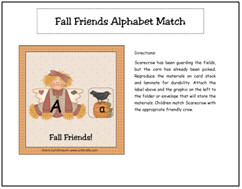
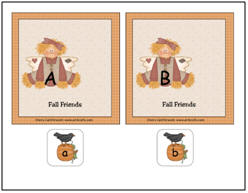
Alphabet Avenue
See Alphabet Avenue
for suggestions and downloads for this center. I would
include an assortment of alphabet charts, alphabet books
to read, sorts for letter attributes (circles, sticks,
colors, lower case and capitals, etc.) and a wide
variety of letter fonts so that children begin to take a
critical look at the way letters are formed.
Task
Board Sign
Classroom Center Sign
ABC Center Menu
|
Artist's Alley
As a reading
teacher, I didn't have this type of center. However,
when I taught third through fifth grades, I always had a
vast supply of materials that students could access for
responses to stories and poems, and for enhancing their
book commercials, book covers, and language arts
projects. This included cardboard and fabric for
polished pieces that were extra special, wallpaper
sample books, construction paper, pinking shears and
other specialty scissors, brads, a stapler and staples,
and much, much more. Many of my more creative students
loved looking at my teacher resource books for ideas for
book projects and some even came back to look through
them in middle school!
This is a good
center to use when putting on a play or puppet show,
flannel board presentation. The students enjoy using
materials like these to express their creativity.
Task Board Sign
Another Task Board Sign
Classroom Center Sign
Another Classroom Center Sign
|
|
Birthday Boulevard
This portable center
activity is for the birthday boy or girl. Gather picture
books that address birthday celebrations and place them
in a colorful backpack for the family to read together
at home. Add a class journal so that the child can
document his/her birthday with pictures, photographs and
a short narrative to share with the class in the
author's chair. You may use a birthday form for them to
fill out. Include a birthday card and a personal message
and send the backpack home for an interactive center. Be
sure to include instructions for the parents and plan
for summer birthdays. Your students will look forward to
the day they get to take the backpack home.
Task Board
Sign
Birthday Boulevard
Classroom
Center Sign
My
Birthday Writing Paper
Suggestions for Center
|
 Blocks Blocks
Task Board Sign
Classroom Center Sign
|
|
Book Boulevard
Provide a wide
variety of books for browsing, some familiar and some
new. Place your recently shared reading books and/or big
books, add some pointers for your first or second
graders and listen for eager reader's voices that might
sound a bit like yours!
Comfortable seating and ambience are important in
a classroom library area. (How often do we sit at a
table or desk to read our favorite novels?!) I like to
include bean bag chairs, pillows, lamps, carpets and
colorfully displayed books. Teaching Resource Center has
"comfort critters." Mine is a six foot long
caterpillar!
Be sure to include an assortment of genre or author
studies, magazines, and books that address whatever
theme you are studying. Bookcases, baskets, bins and
boxes all work well for storing and displaying your
materials!
Task
Board Sign
Classroom
Center Sign
Another Task Board Sign
Another Classroom Center Sign
Center Directions
|
Buddy
Reading
Task Board Sign
Classroom
Center Sign
|
|
Computer Corner
A computer
corner can be used for several purposes. Keep your goals
and standards in mind when designing tasks for this
center. You may want your students to work on their
keyboarding skills, a Power Point or HyperStudio
presentation (for older students), play an interactive
reading or math game, or research material for a science
or social studies report. Biographical studies can also
be pursued via the internet.
My first grade
team uses the computer corner with Scholastic
Interactive Readers. The CDs require the students to
reread their current book and do several lessons to
improve their skills.
Computer Corner
Classroom Center Sign
Another Task Board Sign
Another Classroom Center Sign
|
Cooking Court
or
Cook's Corner
Here's another
one of those that I have not observed in a first grade
classroom (I had a cooking center every week when I
taught kindergarten). However, I do recall our first
graders doing non-cooking food activities that involved
following directions and sequencing, and I believe
the tasks were related to a theme. For instance, during
a spider unit, they made critters with Chinese noodles,
chocolate and . . . I don't know what else. Anyone have
any classroom friendly recipes they want to share? Send
your recipe to me at
carl1404@msn.com
and I'll place it at this site with credit to the
contributor!
Here are some of the
things that one first grade teacher had at her cooking
center:
Fruit
Kabobs for patterning
Apple
turkeys at Thanksgiving
Ants on
a log during insect unit
Jelly
on a Cracker with mini book
The students had to
read the directions and make the item. Before they could
eat, they had to write an explanation of how they made
the treat. This was good for following directions,
sequencing and retelling.
Task Board Sign
Classroom Center Sign
Task Board Sign #2
Classroom Center Sign #2
Another Task Board Sign
Another Classroom Center
Sign
|
|
Dictionary Drive
This
center may be used for reading and alphabetizing
word/picture cards. Students can also construct, add to
and illustrate their own personal picture dictionaries.
|
Dinosaur Drive
Task Board Sign
Classroom
Sign
|
|
Environmental Print
This
center is good at the beginning of the year for
early/emergent readers and to build their confidence at
being able to recognize words from their environment. I
was able to order environmental drawings from RESOURCES
for READING at 1-800-ART-READ. Some of the drawings are
of logos that your children will recognize and the
others are of common, everyday items. These are
especially good for second language learners.
|
Flannel board
Students may
use flannel board pictures for retelling old favorites.
They may sequencing
story pictures or alphabetize words.
Students may
also enjoy making flannel board characters to use with
their own stories to share with the class.
|
|
Games Galore
Thanks to Pepper Paden, a
Reading Specialist and Title I teacher, for this set of
task board signs.
Task Board Sign
|
Graphing Grove
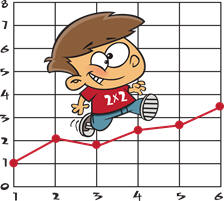
At
this center, you may choose from any number of tasks,
depending upon the grade level and the ability to work
independently. You can put out an assortment of items,
foods, etc. and have students sort and graph. They
should also write "true" statements that summarize the
results of the graph. One of our technological teachers
has her first graders think of a question for their
classmates, conduct a survey and then produce a simple
graph in Excel to share with their classmates. The
teacher puts the graph into her class website for
parents to see. Amazing, huh?!
|
|
Handwriting Highway
Since I saw many different grade levels during my work
day, I had a variety of writing tools for my students to
work with at this corner. This included white boards,
eraser and pens, Magna Doodles, chalkboards, pencil and
paper, marking pens, sand trays, Wikki Stix, stencils
and more (not all out at the same time: too many
options). At the beginning of the year I gave emergent
writers the opportunity to write focus letters on a
large sheet of butcher paper in a variety of sizes and
colors. Brain research shows that children need flexible
practice, often writing with the whole arm in motion,
horizontally (at the table) and vertically (on the large
white board or butcher paper mounted on the wall or
cabinet).
Our first grade
teachers used this to practice writing high
frequency words in many different forms and sizes. See
Teacher Trail for pencil possibilities and tantalizing
tools.
Task Board Sign
Classroom Center Sign
Handwriting Activity Sheet
Writers at Work
|
Housekeeping
Task Board Sign
Classroom Center Sign
|
|
Letter Lane
Suggestions to
follow.
Task Board Sign
Classroom Center Sign
Postcard
|
Listening Lane
After listening to
many squabbles from small groups about turning the
volume up or down, I decided to purchase several
inexpensive tape players and earphones so that each
child was responsible for the controls. Since I only had
two students to a center, this was manageable. I placed
the tape player, earphones, tape and book in a gallon
sized freezer bag.
Task Board Sign
Classroom Center Sign
|
|
Magnetic Mountain
Magnetic letters
stick to many surfaces that make readily available
centers in out of the way corners of the classroom. For
example, I had several metal cabinets, a small
refrigerator, the white board, cookie sheets, and
serving trays that make this center an easy one to set
up. You can have the children sort letters and/or build
words. Tasks may be similar to those in Word Way.
However, children appreciate the opportunity to have
open ended centers, so I often allowed them to explore
with the letters and record their results or read them
to a friend.
These are often used
for practicing high frequency words.
|
Math Mall
Task Board Sign
Classroom Center Sign
Apple Adding File Folder Game
(Cats)
Apple Adding File Folder Game
(Puppies)
Be My Valentine Counting
Birthday Addition Puzzles
Busy Bees Number Order
Button Button Counting
Activity
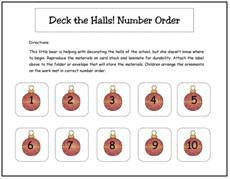
Deck the Halls Number Order
. . .
and lots more on a Center City CD!
|
|
Mystery Mountain
This center is
an excellent place to put your "Problem of the Day" for
practicing problem solving and using thinking skills.
Evan-Moor has several sets that I like to use:
Daily Problem
Solving Math (one for each season for Grades 1-2 and
Grades 2-3).
Each of these sets
have 11" x 17" charts with an illustrated math problem
that follows a seasonal theme. They are good practice in
using what I like to "math language."
Thinking Skills
for Grades 1-2, Grades 3-4 and For Grades 5-6.
Each of these sets
have 44 illustrated charts and accompanying student
pages that encourage children to think critically and
logically.
They have
another set for upper grades called Math Brainbusters
for Graders 3-4 and Grades 5-6.
|
Names Nook
Place each child's name in a three-ring pencil case
along with the letter tiles or magnetic letters with
which to build the name. Children can match pictures of
their classmates with their printed names, place the
names in alphabetical order, and put together teacher
created puzzles of the child's name. Research shows that
young children quickly learn to recognize the names of
their friends, so it is appropriate to use names as
anchors for learning consonant sounds and for emergent
writing.
Check Linda Dorn's
Apprenticeship in Literacy for extensive ideas
for a Names Corner.
More suggestions and
web links:
It's the Name of the Game
Suggestions for Center
Names Nook
Menu
|
|
Origami Corner
When
our first graders were studying Japan, the
teachers put out an origami center. The students had to
follow directions to create their origami.
|
Overhead Projector
I liked to use
cut up poetry transparencies so the children can rebuild
the poem and read it from the white board. I have seen
teachers place the whole poem on the overhead projector
and students are required to use whiteboard markers to
highlight the rhyming pairs (different colors for each
pair).
Transparent letter
tiles or magnetic letters may be used to build the words
of the week, spelling words, or word family words.
There are commercial
games available that use transparent sheets for reading
activities.
Students may also
use an overhead pen to practice writing and reading high
frequency words.
|
|
Painting Place
Task Board Sign
Painting Place
Classroom Center Sign
|
Play Dough
Task Board
Sign
Classroom Center Sign
|
|
Pocket Place
Most of our K-3
classrooms have fifteen or twenty colorful pocket charts
(in many shapes and sizes) that are used for a variety
of purposes: poem of the week, vocabulary, chants,
charts, sequencing, sentence building, sorting pictures
and words, etc. However, Pocket Place is an area set
aside for a specific task for differentiated
instruction.
One of my favorite
uses is for my largest pocket chart. My groups love to
play Junior Jeopardy, a game that is suggested in
Words Their Way. To save time and energy for the
teachers on my staff and in my university classes, I
have created print ready cards for different spellings
for each vowel. (For instance: ay, ai, a-e, a, etc.)
Each game comes with directions, clues and cards and a
cheat sheet with all of the answers for the teacher!
These games are available on the Word Way page of this
website.
Interactive pocket
charts:
Bunny in a flower pot
Valentine Hearts
The children follow the directions and make an art
project. If they don't read and follow the directions,
the project often doesn't work out.
Storing sentence
strips is easier than it was when I first started using
centers in the sixties (I'm showing my age!) There are
commercially produced sentence strip containers with
dividers or you may use wall paper paste trays that are
placed below the pocket chart for easy access.
This is an excellent place to reinforce story sequence.
Children can reconstruct stories, songs or poems that
were introduced during shared reading and then reread
them with a pointer. For nonreaders or emergent readers,
use rebus stories.
|
Publishing Place
Gather a large
assortment of publishing materials, including writing
tools (colored pens, pencils, markers), a variety of
writing paper, stationery, postcards and envelopes
(colors, sizes, and shapes), blank books, journals,
dictionaries, writing prompts, editing posters, charts
describing what good writers do, checklists, and
construction paper for covers. You may also want to
include samples of good writing, rubrics, and picture
book samples of letter writing, journals, and
postcards (see writing bibliography).
Work in progress
needs to have a designated spot and so does work that is
ready to be checked by the teacher for publication on
the computer.
Organization and storage of materials is critical to the
success of Publishing Place. Children need to know
exactly where to put things. Labeled trays and bins are
helpful.
Placement of this center should allow for visibility and
easy access to the classroom names chart, alphabet chart
and the word wall.
What do they write about? Children may write responses
to stories, retellings and/or summaries, or copy changes
of old favorites. This is also a good place for writing
and publishing personal narratives.
Directions
Task Board
Sign
Classroom
Center Sign
Five
W's Chart
Flip
Book for Retelling
My Little
Book of Words for
Special Spelling
My
Little Book of Words for Writing
|
|
Puzzle Place
This is a good place
for alphabet jigsaw puzzles for younger students and
word search puzzles for older students. Again, I like to
have a variety to hold student interest and I would
suggest large floor puzzles as well as table sized
puzzles. After completing an alphabet puzzle,
allow students to use a pointer to "read" the puzzle,
touching each letter as they recite the alphabet.
Task Board Sign
Classroom Center Sign
|
Read the Room
or
Write the Room
Provide a wide
variety of colorful pointers for children to use while
reading text that is displayed around the room. They may
reread familiar student generated books, environmental
labels, word walls, ABC charts, and pocket chart
displays.
I like to hold students accountable for their time in
this rather informal activity. I provide a "Write the
Room" form for them to record and illustrate words
read from the classroom environment. When they
come to their reading group, they read the words to the
group/teacher.
Task Board
Sign
Classroom
Center Sign
Write the Room
Read the Room Menu
|
|
Rhyming Road
If you have a poem of the week, poetry anthologies, or
work with Mother Goose, place the poems in the Rhyming
Road center. Add a pointer or two and let them practice
what is now "familiar" reading.
Copy the poems on
sentence strips and have students place them in the
proper sequence before rereading.
Combine the overhead
projector and the rhyming center in a portable center.
Make two transparencies of the same poem. Use one on the
overhead in conjunction with the white board. Students
can highlight and read rhyming words on the board. Cut
the second transparency into strips for children to
sequence and read from the white board. Store strips in
a labeled three-ring pencil case that fits in a binder
along with the transparency of the poem in its entirety.
I usually put out one poem to avoid mix ups, but this
solves storage and management issues.
Options: poetry charts, poetry cards, poetry books,
class books of poems, and poem of the week to illustrate
and add to individual anthologies.
|
Sand Table
Task Board Sign
Classroom Center Sign
|
|
Science Station
Students are required to learn how to do observational
writing in science. I love what one of my first grade
teachers, Carol Filloon, did with this one. During one
period of study, she had a different pet brought in each
week by a student (it could be the classroom pet). Two
students equipped with clipboards and recording sheets
parked themselves in front of the cage or aquarium to
observe and record. It was wonderful! The teacher
provided related books for students who were interested
in looking into their topic a little bit further. Of
course, this was not the only way she used this center,
but it was one that was well remembered by all who saw
it happening!
Task Board
Sign
Classroom
Center Sign
Another Task Board Sign
Another Classroom Center
Sign
|
Sentence Building
There are many
different ways to create your own sentence building
center, but I took the easy way out: buying ones that
are ready made.
Suggestions include:
©Lakeshore's Sentence Building Pocket Chart, which is
color coded for success. This is an example of
completing cloze sentences, filling in the blanks and
using context clues. I add student names to the nouns
pack.
©Lakeshore's Make a Super Sentence Flip Boards. Students can
build hundreds of sentences with these color coded
sentence parts. Each kit comes with three different
boards and a teacher's guide. Children love to use these
because they so often come up with something so
preposterous that it gives them the giggles. I
particularly like this kit for second language learners
who need to learn about sentence structure.
Word stamps are
available for children to stamp and illustrate
sentences.
A commercial
product, Tub-O-Words and More Tub-O-Words has high
frequency words and punctuation marks for building
sentences. (I also use them for sorting by parts of
speech or orthographic features, syllables, etc.)
Build a Sentence
Sing
a Super Sentence
|
|
Sequencing Corner
This
is the place to put sequencing activities that you
create or buy. It will reinforce comprehension of
stories, sequencing lines in a memorized poem, science
concepts, etc. If you look at Evan-Moor's
Alternatives to Worksheets, you can find hands-on
ideas for crafty presentations of first, next, then and
finally for retelling.
|
Sewing Center
Task Board
Sign
Classroom
Center Sign
Another Task Board Sign
Another Classroom Center
Sign
|
|
Shopping City
Shopping City is a great
place to use your environmental print and to allow
beginning writers to use their knowledge of sounds and
letters to create "shopping lists." Provide a shopping
cart (available at many stores), grocery items
(nonperishable plastic and paper, of course), catalogs,
and wish lists for recording the items your students
would like to buy.
Task
Board Sign
Classroom Center Sign
Another Task Board Sign
Another Classroom Center
Sign
Suggestions
Shopping List
|
Social Studies Street
Good use for
Daily Geography. Once you have finished several days
lessons with the students and modeled how you want it
completed and reported, the students can go on their
own. Also good to use with Rookie Reader map and globe
books or books about different countries.
Students enjoy
working with the globe and maps. This is also a great
way to get those social studies standards in that you
don't have enough time for!
Task Board Sign
Classroom Center Sign
|
|
Sort Street
Sorts, sorts, and
more sorts! Use Words Their Way and All Sorts
of Sorts for ideas for developmental word and
picture sorts, reproduce the appropriate pages on
vellum, and laminate for use. I store mine in labeled
three-hole pencil cases for easy access in a notebook.
Full color picture and word sorts are available in Word
Way. These sorts address a variety of orthographic
features, grammar (nouns and verbs) and other skills
that I have found lacking in some of my students. I'm
picky and prefer pictures in color and that's why I have
developed my own. Enjoy!
This particular
activity teaches students to look for patterns and to
make connections. Brain research suggests that we can
learn through analogy: What do already know that will
help us with this new word?
Task Board Sign
Classroom
Center Sign
|
Spelling Space
If children
understand how the spelling system works, then they can
come to feel they have some control over it.
Spelling Space
would be a good place for students to practice their
spelling words. You may choose to use special worksheets
for your students so that they have the opportunity to
practice, cover, guess and check. There are many
commercially produced programs that have spelling
practice sheets.
This would
also be a good place to use magnetic letters or tiles to
practice building words within a word family, adding
suffixes to root words and practicing spelling rules
such as drop the e before adding -ing or doubling the
consonant.
Task Board Sign
Spelling Space
Classroom Center Sign
Toons Classroom Center Sign
Spell Well Task Cards
Spelling Charts
Spelling Memory Tips
How to Help Children Learn to Spell
-
Let them see writing
published and displayed.
-
Focus on spelling at
appropriate times during the writing process.
-
Teach children that
"spelling" is a strategic thinking process, not a
memory activity.
-
Teach children when,
where, and why spelling matters.
-
Encourage any attempt
students make to spell.
-
Help children to move to
whatever the next stage of developmental spelling is
for them.
-
Provide information about
words when children need it.
-
Help children to link
words into "word families" which have the same
spelling pattern.
From: Teaching Writing, Phenix, p. 91
|
|
Stamps Station
Letter stamps, thematic stamps for "stamp-a-story," or
any stamps you happen to have can be used for making
greeting cards, story illustrations, words and
patterning in math.
|
Teacher Trail
This designates the
teacher working with the guided reading group. Use it to
let your students know when you will be working with
their group so that they can pace themselves at their
centers.
Task Board
Sign
Classroom
Center Sign
Another Task Board Sign
Another Classroom Center
Sign
|
|
Weekly Reader Road
According to one
first grade teacher, this is a good center for rereading
old Weekly Readers for familiar reading and doing the
back puzzle page to check for comprehension. The
students enjoy "reading the newspaper" like their
parents. Our local paper also has a children's newspaper
insert that I used to laminate and collect for free
reading. This center would be a good spot for those, as
well.
Weekly
Reader
Classroom Sign
|
Word Way
Word building is the
task required of children in Word Way. A teacher proudly
showed me her new word building center when we first
began looking at centers with literacy development in
mind. She had colorful magnetic letters and metal
boards for her children to work with, but when I quizzed
her about what words they were expected to build, she
decided she needed to be more explicit with her
instructions. Were they required to build spelling
words, sight words, word family words? How do you know
what words they've built in the center? Where is the
accountability? Our students now know that they need to
record their efforts in a word building log on a daily
basis. In my classroom I use small baskets that I set up
ahead of time and I usually focus on orthographic
"chunks" that children find difficult when decoding
and/or spelling. This information is derived from two
sources: John Shefelbine's Basic Phonics Skills Test
(California Reading and Literature Results
Project) and Johnston's Spelling Inventory (Words
Their Way).
Many commercial products are becoming available to make
our jobs easier. I highly recommend the tiles from
Educational Insights, Inc. The tiles come in blends,
vowel teams, short and long rimes, diphthongs, and more.
You can purchase a kit with word building trays and task
cards. Children need to look at chunks in words in order
to develop fluency and automaticity. Too often we see
them stuck at "spits and starts," trying to produce
every single grapheme's sound. We all know that doesn't
work!
|
|
W.O.W. Corner
or
Word Way
W.O.W. stands
for Words of the Week. Our first grade teachers focus on
several new sight words each week and add them to their
word walls. This corner gives children the opportunity
to practice building the focus words with a variety of
tools. I have developed a
Working with WOW Words
work mat for students to use. Download and print, mount
on vellum, laminate and place in the center along with
the appropriate word tiles, magnetic letters and letter
tiles.
We make sure to
change what we do with this often since what works one
week may bomb the next. We use concrete objects as well
as paper and pencil, crayon, water, noodles, wikki
sticks, clay, etc. anything and everything that makes
them think they are doing something different. We
rainbow write, use cotton balls, sand, pudding, and
toothpicks. Any other ideas out there?
Task
Board Sign
Classroom Center Sign
Working With W.O.W. Words
|
Writer's Way
Writing Center Menu
Writing Center Directions
Writing Center Poster Set
|
|